Construction bin rental
Construction bin rentalFrom $650, before HST
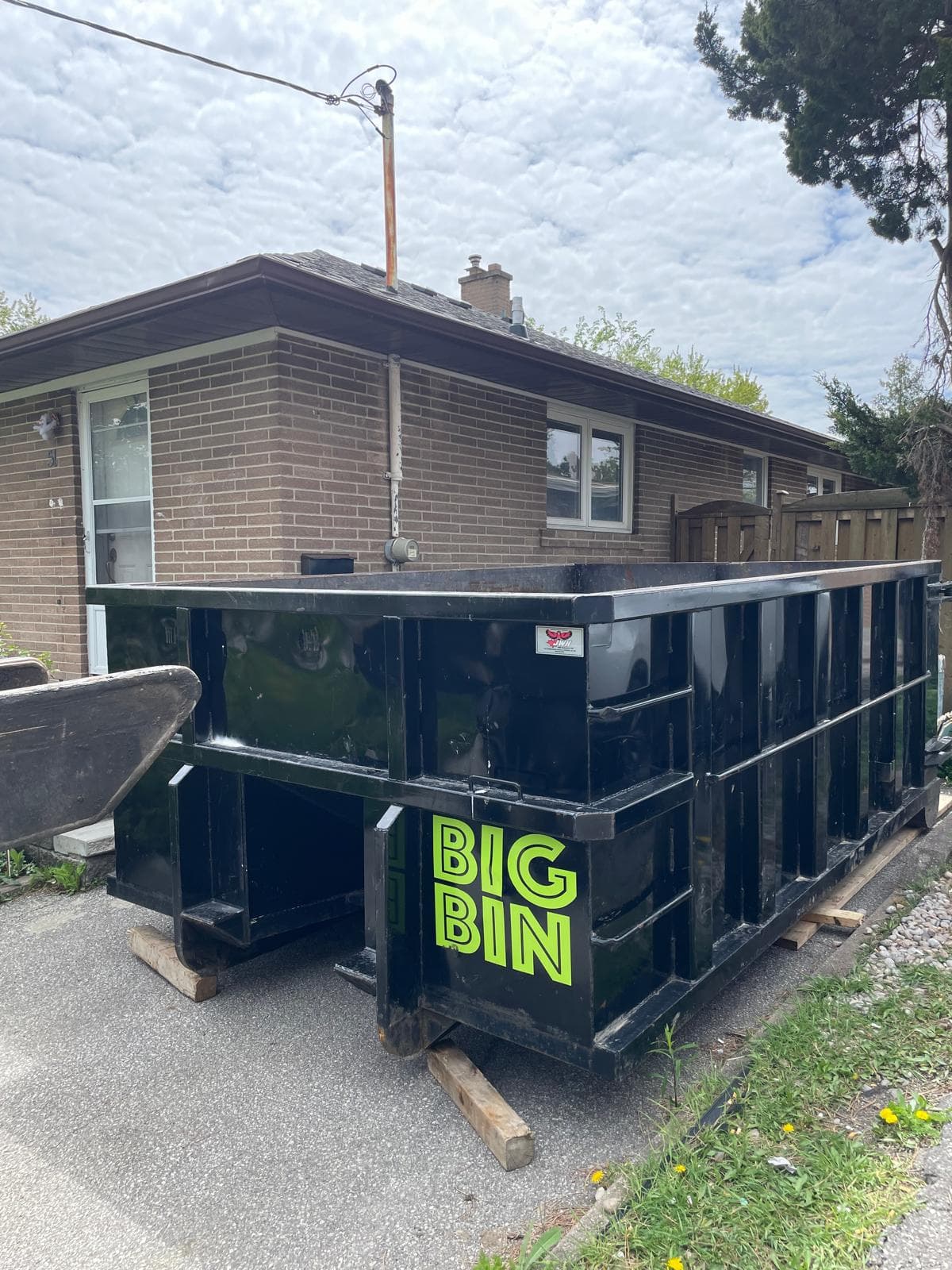
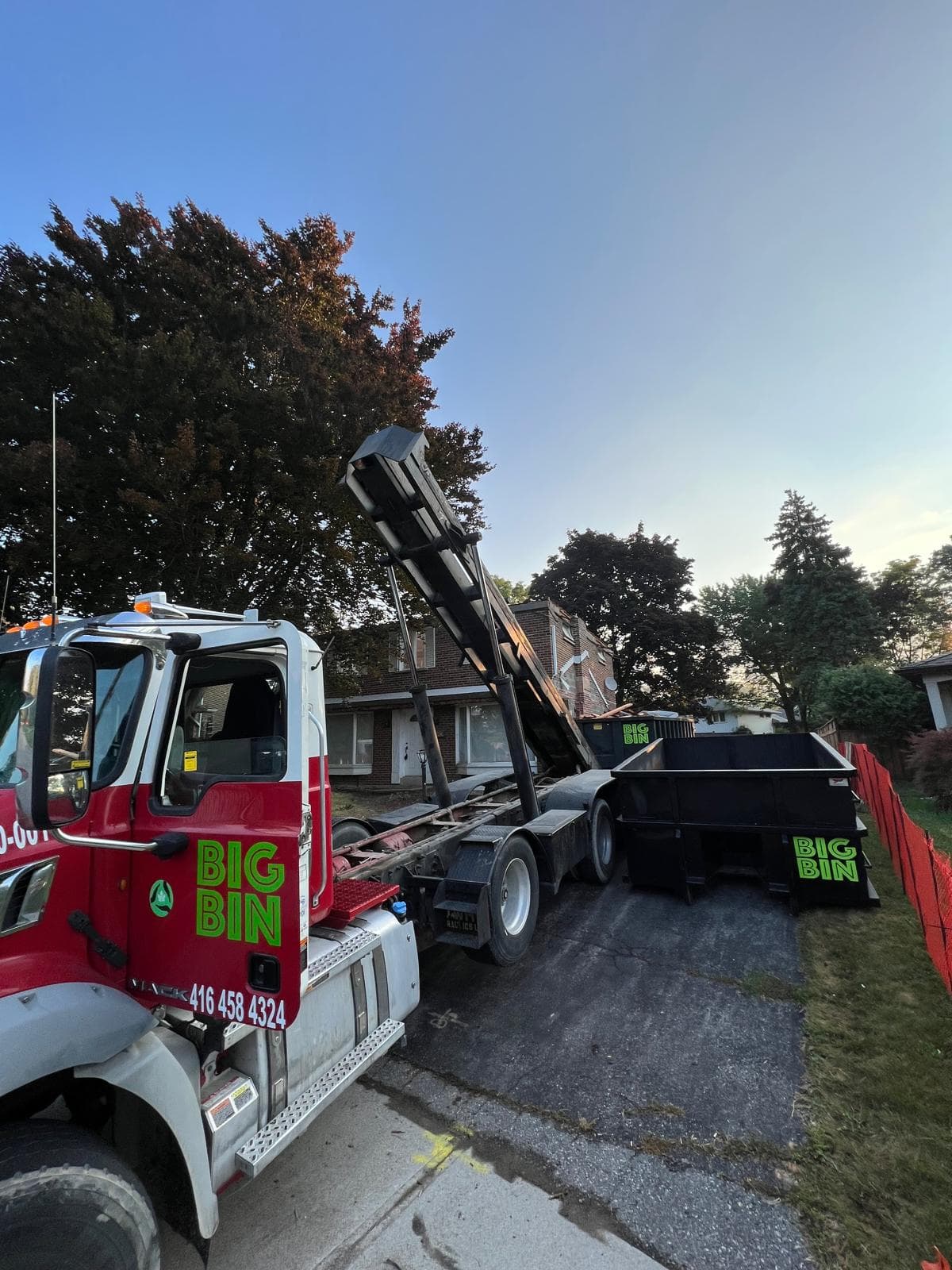
Roll-off bins for a working site, in 14, 30 and 40 yard. A build does not produce one kind of waste, so the right bin changes as the job moves. The crew on site fills it — this is a container, not a clearance service.
- 5-Star Rated
- No distance charge
- 7 days included
- Order by 3PM, next-day delivery
Quick answer
What size bin does a construction or renovation site need?
A construction site needs a different bin at different stages, because a build does not produce one kind of waste. Strip-out and framing waste is bulky and light, so it fills a 40 yard bin long before it gets heavy. Broken concrete, brick and excavated soil are the opposite — heavy enough that a small bin reaches a truck's legal road weight while it still looks half empty. Big Bin — our company — runs 14, 30 and 40 yard roll-off bins, and the free weight estimator says which of those stages will hit the truck's legal weight before the bin looks full.
Why rent from Big Bin
The number you are quoted is the number you pay
Every charge that can ever reach an invoice is listed and explained before you book, not discovered afterwards. Tax is shown inside the figure rather than added at the end.
The same price across the whole delivery area
A job at the far edge of where Big Bin delivers costs what one round the corner from the yard costs. Distance changes the drive, not the invoice.
Order by 3PM, and a bin can be there the next day
That is a cut-off rather than an average, so it is something you can plan a job around. Whether a bin can reach you the same day you ring depends on how full that day already is, and that is a question for the call.
7 days included, and no contract to sign
The rental is the job, not a schedule you are joining. Keep the container longer and the extra days are priced and named; nothing renews and nothing has to be cancelled.
A real price without phoning for it
Postal code, material, size and your dates, and the figure comes back with the tax already in it — priced for your own days rather than for a typical week.
Construction bin rental: the facts
- Rentals from
- $650, before HST
- Service area
- east to Oshawa, north to Orangeville, west to Hamilton
- Bin sizes
- 14 yard · 30 yard · 40 yard — cubic yards of volume, not a weight limit
- Bin type
- Roll-off. The container leaves whole and an empty one comes back
- Room a delivery needs
- Roughly 25 ft overhead, 10 ft wide, 65 ft of straight run — guidance, not a specification
- Who loads the bin
- The crew on site. Big Bin delivers and collects; it does not load
- How long a bin can stay
- As long as the job needs
- Customers
- Builders, renovators, demolition and excavation crews
- Ordering hours
- Monday to Friday, 6:00 am – 6:00 pm. Saturday, 9:00 am – 5:00 pm. Sunday, closed
- Phone
- 416-458-4324
- Getting a price
- Postal code, material and dates in the quote — about 30 seconds
- Weight on a mixed load
- An allowance that rises with the bin, then a rate per tonne at the scale
- Swap terms and turnaround
- A full mixed-waste bin swaps for an empty one at the drop-off rate for that size, and the replacement carries its own tonnage. Next day if the order is in by 3PM the day before. Same day depends on how busy that day is — ask on the phone
What each size costs to rent
| Bin size | What it suits | Weight included | Price from |
|---|---|---|---|
| 14 yard | A bathroom or kitchen strip-out, a garage clear-out, one room back to the studs. | 2 tonnes | $650 |
| 30 yard | A full renovation, a roof tear-off, a house clear-out, a mid-size demolition. | 3 tonnes | In the quote |
| 40 yard | A whole-house renovation, a commercial fit-out, sustained site work. | 4 tonnes | In the quote |
The larger two are priced in the quote, with your own dates counted and the tax already inside the figure.
What our customers say
From our Google Business Profile, read on 2026-09-16
I would like to shout out these guys! Finding a waste disposal company that handles heavy materials like concrete without a bunch of hidden fees or headaches is usually very difficult but Big Bin made the process very easy. Pricing was great and the team was very professional. I would genuinely recommend them for any big project!
Ayman Khaled On time, quick and easy to communicate with, and great service all around
Eldin Malkic Amazing work ! Very good time that takes good care of you !
Evgeny Litvinenko
What does each stage of a build actually produce?
A build does not produce one kind of waste. It produces four, and they arrive in a sequence. That is the thing that decides which bin you want, and when.
Strip-out comes first on most jobs. Drywall, cabinetry, flooring, fixtures and packaging are bulky and light. A 40 yard bin fills with them long before weight becomes a question.
Demolition follows on a bigger job, and it is heavier. Taking the structure out brings plaster, masonry and mixed rubble with the timber. The volume still runs out first, but not by as much.
Framing and fit-out produce the lightest material on the site: offcuts, sheet trim and packaging. Volume is the only real constraint.
Getting the sequence wrong costs money in both directions. A 14 yard bin ordered for strip-out fills in an afternoon, and a job that could have run on two hauls runs on five. Order the other way round and it is worse: a large container of masonry reaches its road weight at roughly a quarter full, which is why the heavy materials are not sold in the large sizes at all.
Then breakout and excavation invert it completely. Slab, footings, brick and block are dense. So is excavated soil, especially wet. A 14 yard bin of either can reach a truck’s legal road weight while it still looks half empty. What does your debris weigh? gives the tonnes for a full bin of each.
Sizes other than the three above come up constantly on a build, and most of them are not on this truck. The Bin size guide answers each one and names the nearest size that exists.
The stages also overlap. A renovation running demolition at the back of the house while fit-out starts at the front is producing both kinds at once, and that is the job most likely to want two containers.
So a single bin booked for a whole job is usually the wrong bin for at least one stage. A roll-off can be taken away full and replaced with an empty one, so the size can change with the stage. What a swap costs, and how fast one happens, is a phone call. What a rental covers is on Roll-off bin rental, and how the truck actually places one is on Roll-off bins explained.
| Build stage | What it produces | Tonnes per cubic yard | Size that usually suits it | What runs out first |
|---|---|---|---|---|
| Strip-out | Drywall, cabinetry, flooring, fixtures, packaging | 0.15 – 0.38 t | 30 or 40 yard | Volume |
| Demolition | Structure: framing, masonry, plaster, mixed rubble | 0.15 – 0.31 t | 30 or 40 yard | Volume, then weight as masonry rises |
| Framing and fit-out | Offcuts, sheet trim, packaging | 0.08 t | 40 yard | Volume |
| Concrete and masonry breakout | Slab, footings, brick, block | 0.39 – 1.37 t | 14 yard | Weight, long before the bin is full |
| Excavation and fill | Soil, and soil mixed with rubble | 0.42 – 0.93 t | 14 yard | Weight |
Should a construction load be mixed or kept clean?
A bin holding one material and nothing else is a different product from a bin holding everything. The receiving facility prices them differently, and that is what drives the decision.
Clean inert material — concrete, brick, block, soil with nothing else in it — can be crushed and reused. A facility charges less to take it. Mixed construction debris has to be sorted or landfilled, and it costs more. On a breakout specifically, Concrete disposal works through what the slab will weigh.
The catch is that "clean" is all or nothing. One sheet of drywall in a bin of clean concrete reclassifies the whole load at the gate, where the facility inspects what comes off the truck. The charge lands on the bin, not on the sheet that caused it.
What counts as contamination is stricter than most people expect. Timber, drywall, plastic sheeting, insulation and general rubbish all break a clean load. Soil with concrete is usually acceptable, but that is worth asking about rather than assuming. Earth dug out of the ground raises a separate question again, because the province regulates where it ends up: Soil and fill disposal covers that. Which produces the counter-intuitive answer. On a job generating both kinds at once, two bins can cost less than one. The clean concrete goes in its own container and is tipped — unloaded at the receiving facility — cheaply; the mixed material goes in another. The full fee list sits on Rental agreement and fees.
Running two bins is less awkward than it sounds. They do not both need to be on site at once. A clean concrete bin can come and go during breakout, while the mixed bin stays for the rest of the job.
Which settles the combination question rather than leaving it to the gate, and the answer is firm. Concrete and soil do not travel together, and nor does anything else dropped into a container sold as clean. A load found mixed is not collected at all, and a bin already filled that way carries a charge on top, named on the fee list and quoted for the job. That is deliberately severe: the alternative is the whole container reclassified as garbage at the gate.
What may go in the mixed container is broader than most crews expect, and the exceptions are mostly not Big Bin’s rules at all — they are the receiving facility’s. Paint, solvents, batteries, propane cylinders, tires, electronics and asbestos each run on their own stream at a regional waste site, with their own limits or their own refusal, whoever hauled them there.
Which stage will hit the truck’s legal weight first?
Breakout and excavation, and it is not close. A bin’s capacity is measured in volume, but what binds first on dense material is what the vehicle may weigh once loaded. Ontario sets that by axle configuration, meaning the number of axles under the truck and the spacing between them, under O. Reg. 413/05, Vehicle Weights and Dimensions, and the Ministry of Transportation’s guide to oversize and overweight vehicles and loads covers what happens above them. That ceiling arrives long before the bin looks full.
The full version of that argument is on Commercial bin and dumpster rental, including what a weight allowance on a mixed load represents and who pays when one goes over.
The container has a limit of its own that no scale is involved in — a painted line a foot and a half under the rails, above which nothing can be strapped down for the road.
Work out the stage before you book the bin
Put the dimensions of what this stage is producing into the estimator. Then order a size that can legally carry the result — and neither step wants an email address.
What a site needs before the truck arrives
A delivery needs more room than the bin ends up occupying. On a working site that is easy to get wrong, because the space looks free on the day you order.
What a delivery needs from the ground — the straight run, the overhead room, the surface — is the same on any site. What changes on a build is everything around it.
The part specific to a build is timing. A bin cannot go where a trade needs to work next week, and moving one after it is down is a truck visit rather than a shove. Think about the delivery route for materials as well: a bin placed for the strip-out can block the run for the framing package.
There is also the question of who else needs the ground. A container sitting for the length of a job occupies that space for weeks. On a tight site that is often the space a delivery wants, or where the scaffold goes up.
And the constraint moves as the job does. A placement that works during strip-out can be the wrong one once the scaffold is up or the driveway is being poured. It is worth walking the sequence before the first delivery rather than after the third.
Start from the container. The largest is 7' × 20' × 7'6" — height, then length, then width — and all three are listed on Bin size guide. Mark that outline on the ground, then keep walking: a delivery wants more room than the box ends up occupying, and the facts table gives the figures.
Putting the container on the street instead of the site is a municipal question, at a fee the city sets. Applying is the site’s job as things stand: the permit stays with whoever is renting, and the company does not file it — an arrangement the business may change later, and has not. Settle it before the delivery is booked rather than on the morning. How a truck places a container is on Roll-off bins explained.
Not sure the site will take a delivery? Talk it through first. Call 416-458-4324
Bin rental or junk removal?
These are two different purchases, and the search results mix them constantly.
A bin rental drops a container on your site. It stays there, your crew fills it on their own schedule, and a truck takes it away when you say so. You are paying for the container, the two truck trips and the disposal.
Junk removal sends people. They arrive, load the material themselves, and leave the same day. It is priced by the volume they take and the labour it took to move it.
Big Bin rents the bin. It does not send a crew to load it.
Which one you want follows from the shape of the job. A quick test: is there somebody on site who will fill it? If trades are already working, they will — clearing as you go is part of the job. If the site is empty and somebody has to be paid to carry material out, that is the labour junk removal exists to sell.
The pricing follows the same split. A bin is priced on the container, the two truck trips and the disposal. Junk removal is priced on the volume taken and the hours it took to move it. On an active site with trades already there, paying for that labour again is paying twice.
The full comparison, including the jobs where a crew is the better answer, is on Bin rental or junk removal?. For a site running long enough to need repeat hauls, Commercial bin and dumpster rental covers what a business keeping a bin on site is buying. Otherwise Get a quote starts a rental.
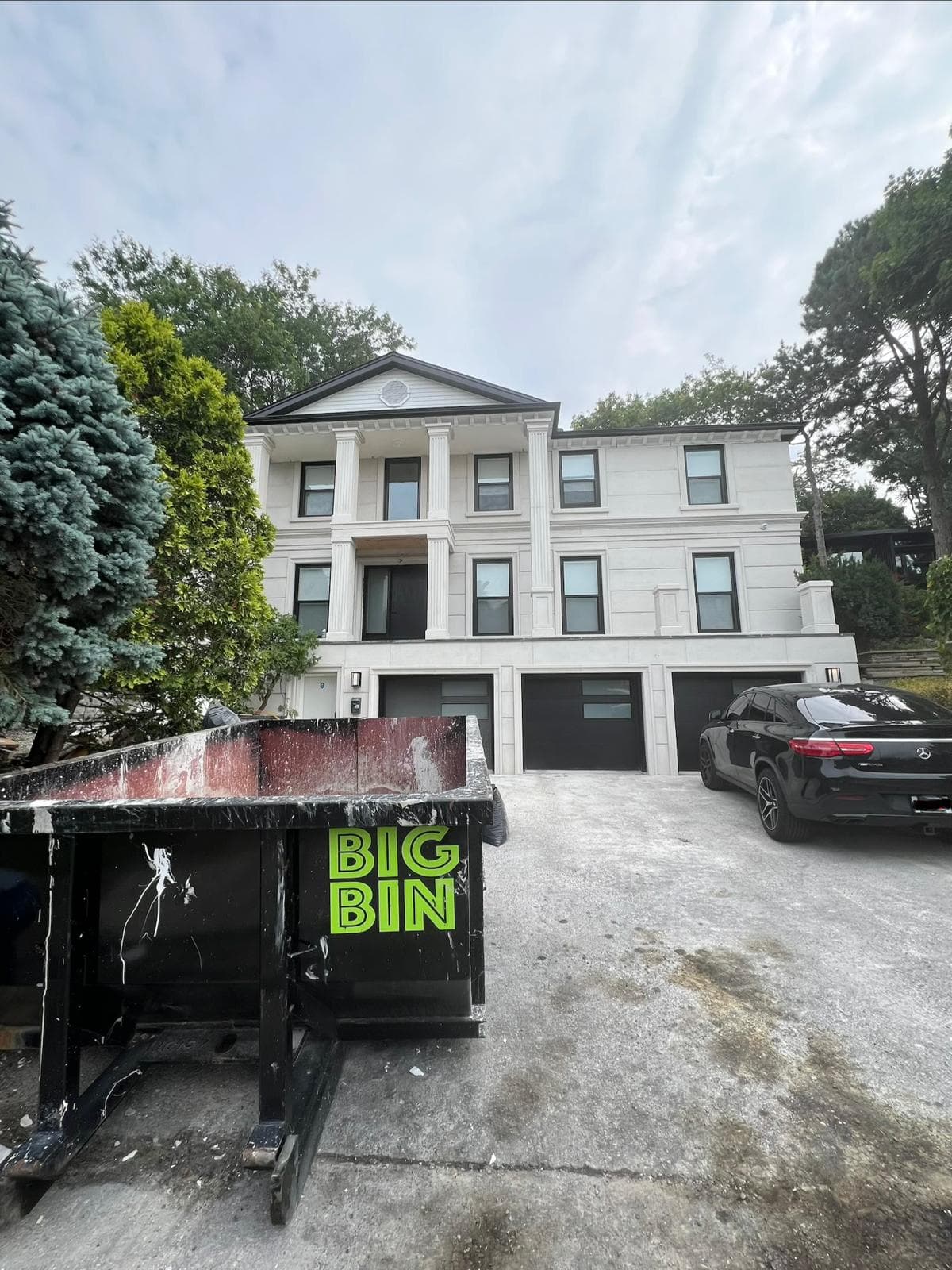
What a construction bin costs, and how a job runs
A bin on a build is billed as a cycle, not as a rental period. The truck delivers, the crew fills, the truck takes the load away and disposes of it. On a job that runs, those three steps repeat.
So a six-month build is not a single rental with a long tail. Each fill is its own haul and is billed as one, which is why a per-haul figure tells you more than a daily rate.
A build usually buys two differently-priced products without noticing. Strip-out, demolition and fit-out waste is billed on a tonnage: the container and its two truck trips, an amount of weight included, and a rate for every tonne beyond it — so the advertised figure holds only while a load stays under that amount. Clean concrete and clean fill are billed as one complete haul, with no tonnage in the figure and a fill line where the allowance would be.
That matters most on a site running breakout beside strip-out, because the two containers standing next to each other are not on the same bill at all. On the tonnage half, a cheap base with a thin allowance can work out dearer than a fuller one on dense material.
Ordering opens at 6:00 AM on weekdays, which is when site decisions get made.
The pricing page sets out how both shapes fit together: What a bin costs. What repeat buyers get is on Bin rental for contractors. And Get a quote starts one.
01
Tell us about the job
Call or email with what you are clearing, where a container can stand, and when you need it.
02
The bin arrives
A truck sets the container where you asked. Nothing is tipped on site: you or your crew fill it, on your own schedule.
03
It leaves full
The truck takes the whole container away, and the load crosses a scale at the receiving site.
What will this stage weigh?
A build produces four kinds of waste and they weigh nothing like each other. Put the stage you are on into the estimator and it returns tonnes — which is what decides whether the size you were about to order is the size you can legally fill.
Questions from a working site
What size bin does a renovation usually need?
It depends which part of the renovation. A strip-out fills a 40 yard bin with drywall, cabinetry and flooring long before the weight matters. The same job’s tile, mortar and broken concrete will reach a truck’s legal road weight in a 14 yard bin that still looks half empty. Most renovations get through more than one bin for that reason, and the useful question is not "what size" but "what size, at which stage".
Can concrete and drywall go in the same bin?
Physically yes, commercially it is usually a mistake. A bin holding only clean concrete is inert material a facility can crush and reuse, and it is cheaper to tip. Add drywall, timber or packaging and the whole load is reclassified as mixed at the gate, priced on the bin rather than on the sheet that caused it. On a job producing both, two bins can cost less than one — and on this site that is the only option rather than the cheaper one, because a clean load found with anything else in it is left where it stands instead of being taken away. Plan the split before the first bin is filled; it is a cheap decision in advance and an expensive one at the gate.
Does Big Bin load the bin, or does the crew on site do it?
The crew on site does. Big Bin delivers the container, leaves it where you asked, and collects it when you are done. Nobody arrives to fill it for you. That is the difference between a bin rental and junk removal: junk removal sends people who load it and leave the same day, priced by volume and labour. On an active site with trades already working, the bin is almost always the cheaper of the two.
How many bins does a typical build get through?
More than one, and the number follows the stages rather than the size of the building. Strip-out and demolition produce bulky light material. Framing and fit-out produce offcuts and packaging. Breakout and excavation produce dense material that is heavy long before it is bulky. Each of those wants a different bin, and on a long job the same container gets swapped as it fills. A swap on a mixed-waste bin is charged at the drop-off rate for that size, and the empty one brings its own weight allowance with it. Order by 3PM and the next container can be on site the following day; same day depends on how full that day already is.
Can a bin sit on a construction site overnight and at weekends?
Yes. A roll-off bin is not on a collection schedule — it stays where the truck set it down until you ask for it to go. That is what makes it suit a build: the container is there when a trade is working and still there when they are not. What it cannot do is sit on a public road without municipal permission. Applying is the site’s job as things stand — the permit stays with whoever is renting the container and Big Bin does not file it — and what the city charges depends on the municipality and, in several of them, on the class of road.
What happens if a trade needs the space where the bin is parked?
Plan the placement before the delivery, because moving a bin once it is down is a truck visit rather than a shove. A loaded container cannot be dragged sideways by hand. Think about where the next trade needs to work, where material is being delivered, and where the truck can still reach the bin to collect it. Call and we will tell you what moving one costs before you need it moved.
Does a demolition produce more waste than a renovation?
More, and denser. A renovation strip-out is mostly drywall, cabinetry, flooring and packaging, which is bulky and light. A demolition takes the structure with it, so the same volume carries more masonry, concrete and brick. On the published density figures a bin of demolition debris weighs appreciably more than the same bin of mixed renovation waste, and the gap widens once breakout starts. The weight estimator works out both.
Sources
Every fact on this page that is not simply how renting a bin works, and the public document it came from.
Source 1
Government of Ontario — no publication date printed; retrieved 2026-08-11
Source 2
Guide to oversize/overweight vehicles and loads
Ontario Ministry of Transportation — 2 July 2025
Source 3
Volume-to-Weight Conversions (document w-sw2-08)
Minnesota Pollution Control Agency — September 2021
Source 4
Volume-to-Weight Conversion Factors
United States Environmental Protection Agency, Office of Resource Conservation and Recovery — April 2016
Reviewed August 2026Kenan Sljoka
Also on this site
Service
Commercial bin and dumpster rentalService
Concrete disposalService
Soil and fill disposalService
Bin rental near youService
Dumpster rental
Useful things to read
Free tool
What does your debris weigh?Page
Bin rental for contractorsService area
Bin Rental in MississaugaService area
Bin Rental in BramptonService area
Bin Rental in OakvilleService area
Bin Rental in WhitbyService area
Bin Rental in OshawaService area
Bin Rental in Pickering
Tell us what stage the job is at
Say what the site is producing now and where a bin can stand, and we will tell you which of the three sizes suits it. Your crew fills it. Get a quote starts one, and every way to reach the business is on Contact Big Bin.